

On dressing the interior woman
A kitchen conversation about accuracy, embodiment, and finally dressing for the inside.

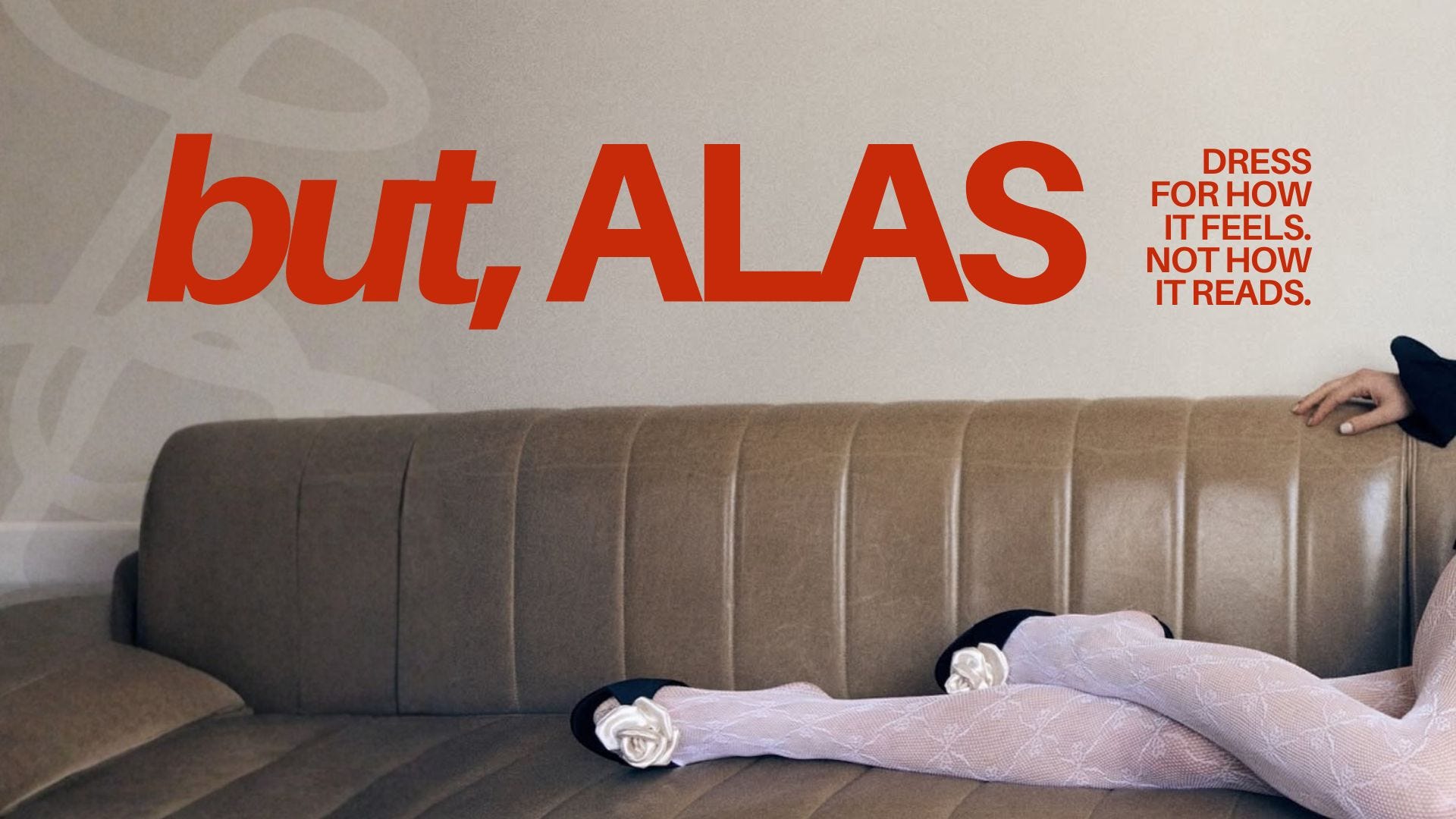
We were standing in my kitchen, halfway through a bottle of Sancerre, when the conversation turned — as it often does — to clothes.
The cheese board was aggressively homemade. Not rustic — opinionated. One soft cheese already collapsing in on itself, a harder one shaved into curls that looked accidental but absolutely weren’t. Figs sliced with confidence. Olives that had clearly lived.
No one was wearing shoes. The good light was doing most of the heavy lifting. The wine kept (mysteriously) refilling itself, which I took as a sign of alignment.
“I think,” my friend said, staring into her glass like it might argue back, “I don’t dress for how I want to look anymore. I dress for how I want my body to feel.”
Not dramatic.
Just accurate in a way that lingered.
Because for a long time, I dressed for the room.
Not consciously — more like muscle memory. I could feel the temperature of a space before I entered it. Who I needed to be. How legible I should make myself. Clothing became a quiet negotiation: a way to show up already translated, already smoothed.
At the time, I didn’t think of this as strategy. I just thought I had good style.
Which is probably why the shift surprised me — because lately, I’m dressing for someone else entirely.
Cue: the interior woman.
She’s not particularly interested in trend cycles. She doesn’t care what’s having a moment. The phrase must-have mostly makes her tired.
What she cares about is whether something feels cooperative.
Whether a fabric clings when it shouldn’t.
Whether a silhouette feels like work.
Whether an outfit turns into a conversation she wasn’t trying to have.
Her standards aren’t just aesthetic — they’re somatic.
She knows immediately when a neckline feels like an invitation she didn’t agree to. She notices when a waistband feels constricting. And she relaxes the second an outfit stops auditioning.
On days when I feel grounded, I reach for weight — pieces that drape instead of grip. When I feel tender, I want softness. Knits. Silk. Anything that acts like a buffer between me and the world.
And on days when I feel quietly powerful — not loud, not performative — I want simplicity. Clean lines. Fewer decisions. Clothes that don’t interrupt my thoughts.
I tried to explain this out loud, gesturing vaguely at myself, the wine, the cheese board — the whole scene.
My friend nodded.
“Yeah,” she said. “I think I’m done wearing clothes that ask too much of me.”
Exactly.
Because this is the part of personal style that never really shows up in shopping guides:
It’s not about expression.
It’s about accuracy.
About using your clothes to tell the truth — not just about where you are, but where you’re trying to land.
Soft when you need softness.
Structure when you need steadiness.
Simplicity when you need quiet.
Clothes as reinforcement.
As support.
As a way of meeting yourself halfway.
The interior woman, I’m learning, is mostly just tired of being misrepresented.
She knows when an outfit is lying on her behalf. She knows when she’s being edited for comfort. And she settles almost immediately when she recognizes herself in the mirror.
That’s the feeling I chase now — not confidence, not coolness, not validation.
Accuracy.
That quiet moment where you look at yourself and think: oh. there you are.
By the time the wine was gone and the cheese board looked appropriately ravaged, the conversation drifted — as it always does — toward something else.
But I kept thinking about how rarely we talk about this part of style.
Not how it looks.
Not what it signals.
But how it stops asking things of us when it’s right.
Maybe that’s the real luxury now — clothes that don’t demand a mood, a confidence level, or a performance.
Just clothes that let you be where you already are.
Which feels less like a statement — and more like a relief.